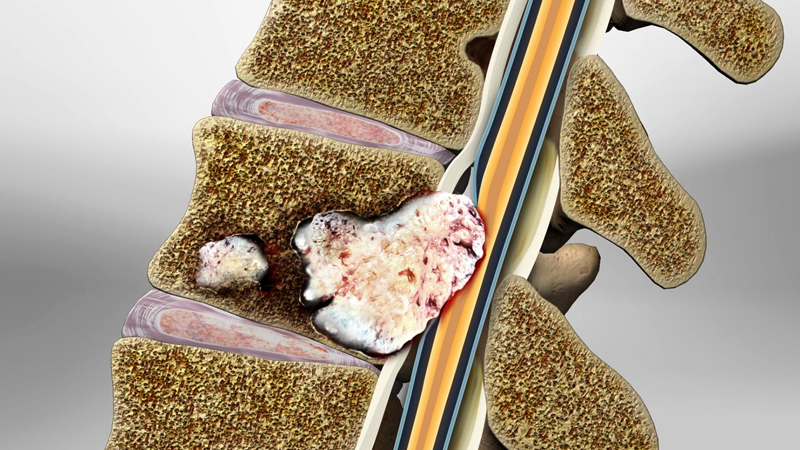
Advanced Spine Tumour Surgery in South Mumbai
Spinal tumours are abnormal tissue growths arising within the spinal cord, nerve roots, protective spinal membranes (dura/meninges), or the bones of the vertebral column. Operating at Bombay Hospital & Medical Research Centre in South Mumbai, Dr. Aakash Jain provides specialized microsurgical and reconstructive care for both benign and malignant spinal tumours, focused on relieving cord or nerve compression, preserving neurological function, and maintaining spinal stability.
Patients can schedule comprehensive evaluations and surgical consultations at Bombay Hospital in South Mumbai or visit our clinic in Ghatkopar for MRI reviews, second opinions, and follow-up support (see also our broader spinal infections and tumors care overview).
Understanding Spinal Tumours
Spinal tumours are classified by where they originate within or around the spinal column, as well as whether they begin in the spine (primary tumours) or spread from another organ (metastatic tumours). Because spinal growths can compress sensitive neural pathways even before causing severe bone pain, early imaging and specialist evaluation are critical to protecting strength, balance, and sensation.
Anatomical Classification of Spinal Tumours
-
Intradural-Extramedullary Tumours – Growths situated inside the dural sac around the spinal cord or nerve roots, including meningiomas and nerve sheath tumours (such as schwannomas and neurofibromas).
-
Intramedullary Tumours – Tumours arising directly within the substance of the spinal cord itself, such as ependymomas and astrocytomas, requiring high-magnification microdissection and neurophysiological monitoring.
-
Vertebral Column (Extradural) Tumours – Tumours involving the bony vertebrae or epidural space, including benign bone lesions (such as osteoid osteoma or hemangioma) and metastatic spread from cancers of the breast, lung, prostate, kidney, or thyroid.
| Tumour Location | Common Examples | Key Surgical & Care Considerations |
|---|---|---|
| Intradural-Extramedullary | Meningioma, Schwannoma, Neurofibroma | Microsurgical dural opening, nerve root preservation & complete excision |
| Intramedullary | Ependymoma, Astrocytoma | Midline myelotomy, intraoperative neuromonitoring & cord-sparing resection |
| Extradural / Vertebral | Metastatic lesions, Osteoid osteoma, Chordoma | Epidural decompression, spinal stabilization & multidisciplinary oncology coordination |
Symptoms of Spinal Tumours
Symptoms depend on the tumour's spinal level (cervical, thoracic, or lumbar), size, and rate of compression on the spinal cord or cauda equina:
-
Persistent, progressive back or neck pain that often worsens at night or while lying flat and does not respond to routine rest
-
Radiating pain, burning, or nerve root irritation extending into the shoulders, arms, chest wall, hips, or legs
-
Numbness, tingling, or reduced temperature/touch sensation in the hands, feet, or trunk
-
Progressive limb weakness, hand clumsiness, or difficulty standing and walking
-
Unexplained bladder or bowel urgency, retention, or incontinence in advanced spinal cord or cauda equina compression
-
Postural imbalance or spinal deformity when vertebral bone is weakened or collapsed
Advanced Diagnostic Evaluation
Safe surgical planning for a spinal tumour requires defining exact anatomical margins, cord compression, and bone stability:
-
Neurological & Clinical Examination – Detailed assessment of motor strength, reflexes, sensory levels, gait, and sphincter function.
-
Contrast-Enhanced MRI Spine – High-resolution imaging to delineate tumour boundaries, dural attachment, spinal cord edema, and nerve root involvement.
-
Computed Tomography (CT) Scan – Detailed evaluation of vertebral bone erosion, lytic/blastic changes, and structural load-bearing strength.
-
PET-CT / Whole-Body Staging – Identifying primary tumour sources or systemic disease extent when spinal metastasis is suspected.
-
Tissue Biopsy (CT-Guided or Open) – Histopathological confirmation to guide definitive surgical and oncological treatment.
Comprehensive Surgical & Multidisciplinary Approach
Dr. Aakash Jain tailors treatment to tumour histology, neurological status, and spinal stability, coordinating closely with medical and radiation oncologists when adjuvant care is indicated:
1. Microsurgical Tumour Excision & Decompression
Using high-magnification surgical microscopes and fine micro-instruments, Dr. Aakash Jain carefully separates tumour tissue from the spinal cord and nerve roots to achieve safe decompression or gross total resection while protecting neural pathways.
2. Vertebral Stabilization & Complex Reconstruction
When tumour infiltration or bone resection compromises vertebral stability, internal fixation with pedicle screws, rods, cages, or cement augmentation is performed—drawing on complex reconstruction and fusion procedures or spinal deformity correction when structural alignment requires rebuilding.
3. Minimally Invasive Decompression & Adjuvant Coordination
In selected cases, minimally invasive spine surgery principles help reduce muscle disruption and post-operative recovery time, while targeted radiation therapy or systemic oncology treatments are coordinated seamlessly when indicated.
Why Choose Dr. Aakash Jain for Spine Tumour Surgery in South Mumbai?
-
Focused Spine & Reconstruction Expertise – Consultant Spine Surgeon at Bombay Hospital & Medical Research Centre (South Mumbai) experienced in intradural, extradural, and reconstructive spinal procedures (and distinguishing neoplastic lesions from tuberculosis of the spine or degenerative spine disorders).
-
Tertiary Hospital Infrastructure – Access to surgical microscopes, intraoperative neuromonitoring, imaging support, and critical care facilities at Bombay Hospital.
-
Multidisciplinary & Follow-Up Support – Collaborative care with oncology teams plus accessible follow-up consultations in South Mumbai and Ghatkopar (see patient stories on our testimonials and clinical cases pages).
Frequently Asked Questions (FAQs)
When to Seek Immediate Medical Attention
Seek prompt specialist evaluation if persistent or night-time back or neck pain is accompanied by new limb weakness, numbness, walking unsteadiness, or any bladder or bowel control changes.
Schedule a consultation today or connect on WhatsApp to review your MRI and symptoms with Dr. Aakash Jain in South Mumbai.